.png)
Trauma

Trauma
As the word trauma has entered the popular lexicon, there has been an outsized focus on labeling experiences themselves as traumatic. While certain events are widely recognized as traumatic by nature—such as poverty, abuse, neglect, violence, and disaster—from a clinical standpoint, what matters most is how an individual’s internal state is altered by the experience.
This is true for events commonly referred to as “small t” traumas (e.g., divorce, job loss) as well as “big t” traumas (e.g., active combat, physical abuse). The impact of an event is not determined solely by the event itself, but by how it is processed and integrated by the person who experiences it.
An individual’s response to a potentially traumatic event is shaped by factors, including perceptions, expectations, distress tolerance, values, access to support and more. As a result, multiple people can live through the same event and be affected in vastly different ways.
When the emotional and psychological effects of an event persist long after the threat or stressor has resolved – and continue to interfere with wellbeing, functioning, or sense of safety – a trauma-related disorder may be present.
Common Trauma Symptoms
Understanding the differences: Post Traumatic Stress Disorder (PTSD) and Trauma-Related Distress
.avif)
Our approach to treating Trauma
True Life Center treats trauma disorders through an integrative approach that addresses psychological, physiological, and relational factors. We prioritize safety and symptom stabilization, teach skills to regulate the nervous system, and support gradual reengagement with daily life, relationships, purpose and joy.
Learn MoreWhy Choose TLC for Trauma Treatment?

Evidence Based Modalities We Use To Heal Trauma Include:

Integrative Psychiatry
Medication management informed by each individual's unique neurobiology...
Learn More
Dialectical Behavior Therapy (DBT)
Building skills for emotional regulation, distress tolerance, and healthier relationships...
Learn More
Lifestyle Medicine
Manage and optimize foundational health factors, habits, and behaviors...
Learn More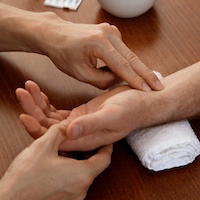
Chinese Medicine
Restoring balance through time-honored Eastern healing philosophies and practices...
Learn More
Mindfulness Based Stress Reduction (MBSR)
Cultivating present-moment awareness to reduce stress and emotional reactivity...
Learn MoreFrequently Asked Questions About Our Program
Wondering what to expect? You’re not alone. We’ve got answers—and we’re here to talk through anything you’d like more information about. Contact Us, we’re here.
As part of our commitment to delivering exceptional and integrative mental health care, True Life operates as a private pay treatment provider, however, many of our patients receive partial reimbursement through PPO insurance plans.
Each patient and family works directly with our concierge billing specialist, who submits courtesy claims and superbills to insurance on patients’ behalf, prepares and provides all required documentation for out-of-network claims, advocates for the maximum allowable reimbursement, and coordinates authorizations and doctor-to-doctor calls when necessary. Most importantly, our specialist provides transparency, accessibility, and ease to you along the treatment journey.
True Life Center offers an integrative mental health program combining carefully selected modalities from both Eastern and Western disciplines. Our approach brings together therapy, psychiatry, somatic practices, and lifestyle-based interventions under one coordinated plan. For an overview, please see our Complete Care Model graphic, or visit our Interventions page for a detailed breakdown of specific services.
True Life Center supports adults navigating a wide range of mental health challenges, including anxiety, depression, trauma, neurodivergence, grief and loss, chronic pain, life transitions, and more. Our integrative approach addresses not just the diagnosis, but the full experience of each patient. Visit our Treatment Specialties page for a complete list and to learn more about how our program can be tailored to your needs.
Starting your journey at True Life Center is simple. You can reach out via our confidential form, or give us a call and a dedicated team member will reach out to guide you through the process, answer your questions, and help schedule you for a tour or initial assessment. Thanks to our boutique size, we are typically able to accommodate new patients quickly, so you can begin care without delay.
We're ready to help.



-min.avif)
